

A ceiling fan costs roughly 0.2 to 2 cents an hour to run, and installing one in Melbourne typically adds about $80 to $500 in electrician costs, depending on the wiring. Add the fan itself, and a typical bedroom or living room job lands somewhere between $300 and $900. Here is how the numbers break down, so you can budget before the first heatwave.
Spring is a smart time to sort it out. Some electricians offer better rates outside peak summer, when demand for fan installs is high, and a fan on low speed costs far less than an air conditioner working through January. Everything below uses 2026 pricing from Australian sources and the Oz Lights Direct range.
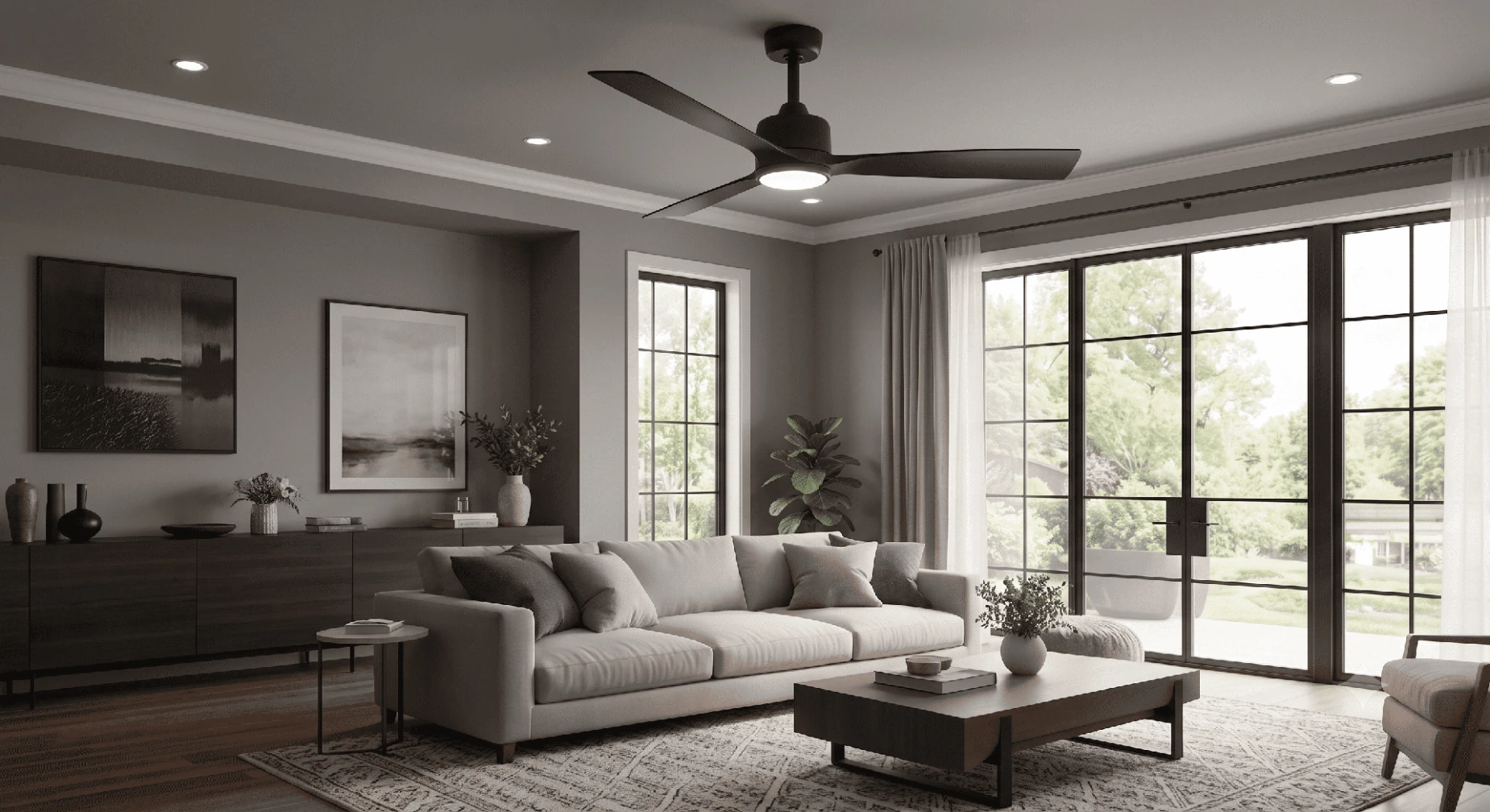
What Does a Ceiling Fan Cost to Run?
Very little. Canstar Blue figures put a low-speed 5.2W DC fan at about 0.17 cents an hour, or roughly $1.22 across a whole summer. A high-speed 58W AC fan costs about 1.9 cents an hour, or around $13.68 over the same season. The NSW Government lands in the same territory, at 1 to 3 cents an hour.
About 0.17 cents | Ceiling fan, low speed, DC | 5.2W motor |
About 1.9 cents | Ceiling fan, high speed, AC | 58W motor |
About 25 cents to $1.33 | Air conditioner | Varies by type and location |
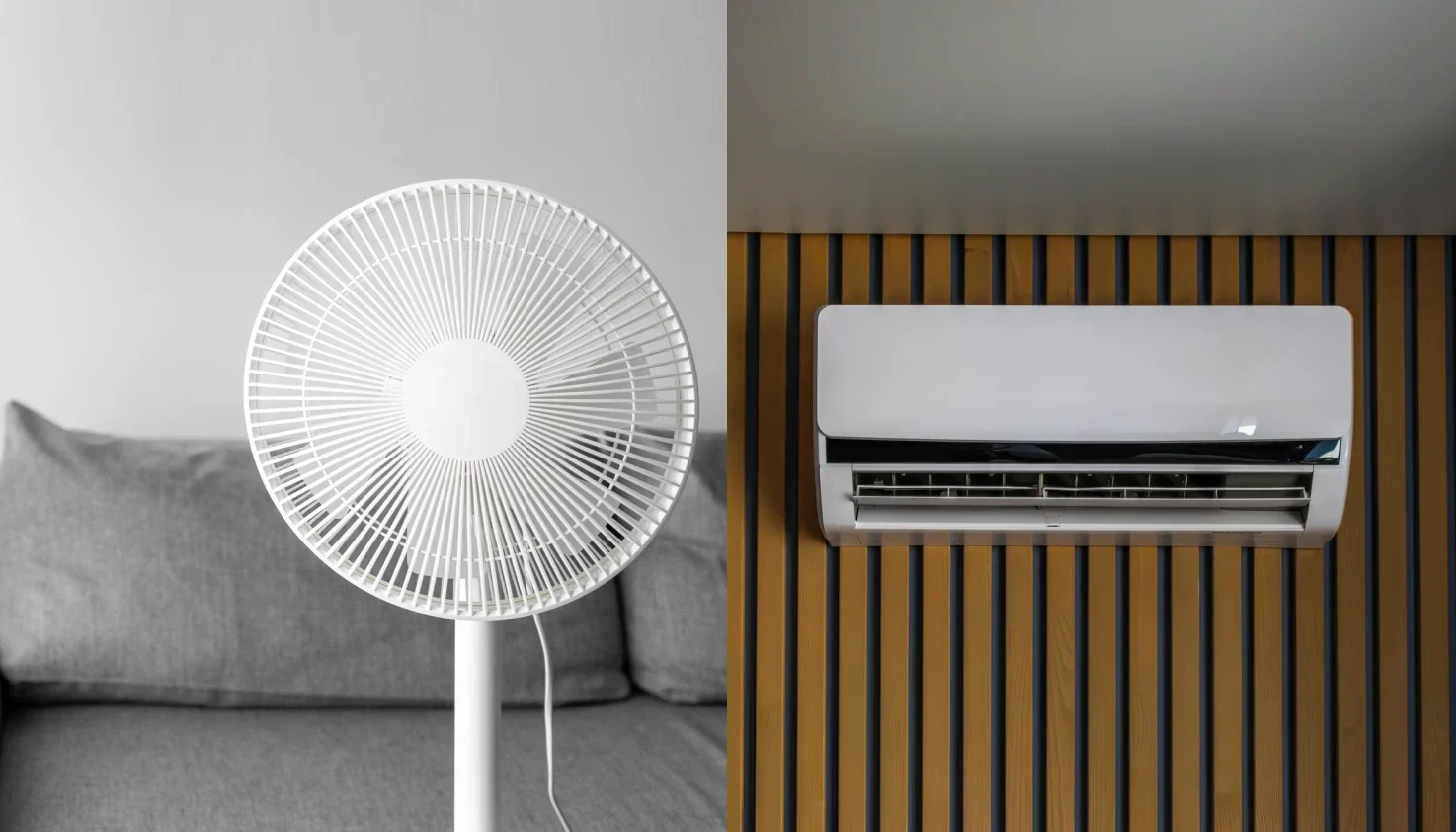
That gap is why a fan is the cheapest way to take the edge off a hot day. One caution: a fan cools you, not the room. It moves air across your skin so sweat evaporates faster, so the temperature on the thermometer does not drop. Switch it off when you leave, and on the hottest days pair it with an air conditioner set to 24 to 26 degrees.
DC or AC Motor: Which Costs Less?
DC motors use magnets rather than the coils in older AC designs, and they draw far less power. Published estimates put the saving at up to 70 percent, with typical DC fans using 15 to 30 watts against 50 to 100 watts for standard AC models. DC fans are also close to silent and usually offer six or more speeds, which is why most smart ceiling fan models use them.
Here is the honest maths, though. If an AC fan draws 55W and a DC fan draws 25W, and you run either for eight hours a day across a 120-day summer, the DC fan saves about 29kWh. At roughly 33 cents a kWh, that is under $10 a year. A DC fan costs around $100 to $250 more upfront, so the bill saving alone takes a long time to pay off.
The better reasons to choose DC are the ones you can feel. Silence matters in a bedroom, extra speeds let you fine-tune airflow, and most models come with a remote or smart control. If the fan runs every night, DC is worth it. For a spare room or a fan that runs occasionally, a good AC fan is perfectly sensible. If you are shopping for energy efficient ceiling fans, treat efficiency as a bonus rather than the whole case.
In the Oz Lights Direct range, the Catalina DC fan starts at $199.95, the Calibo Condor 52-inch DC smart fan is $319, and the Calibo Breeze Silent 48-inch AC fan is $229. Prices were current in September 2026.
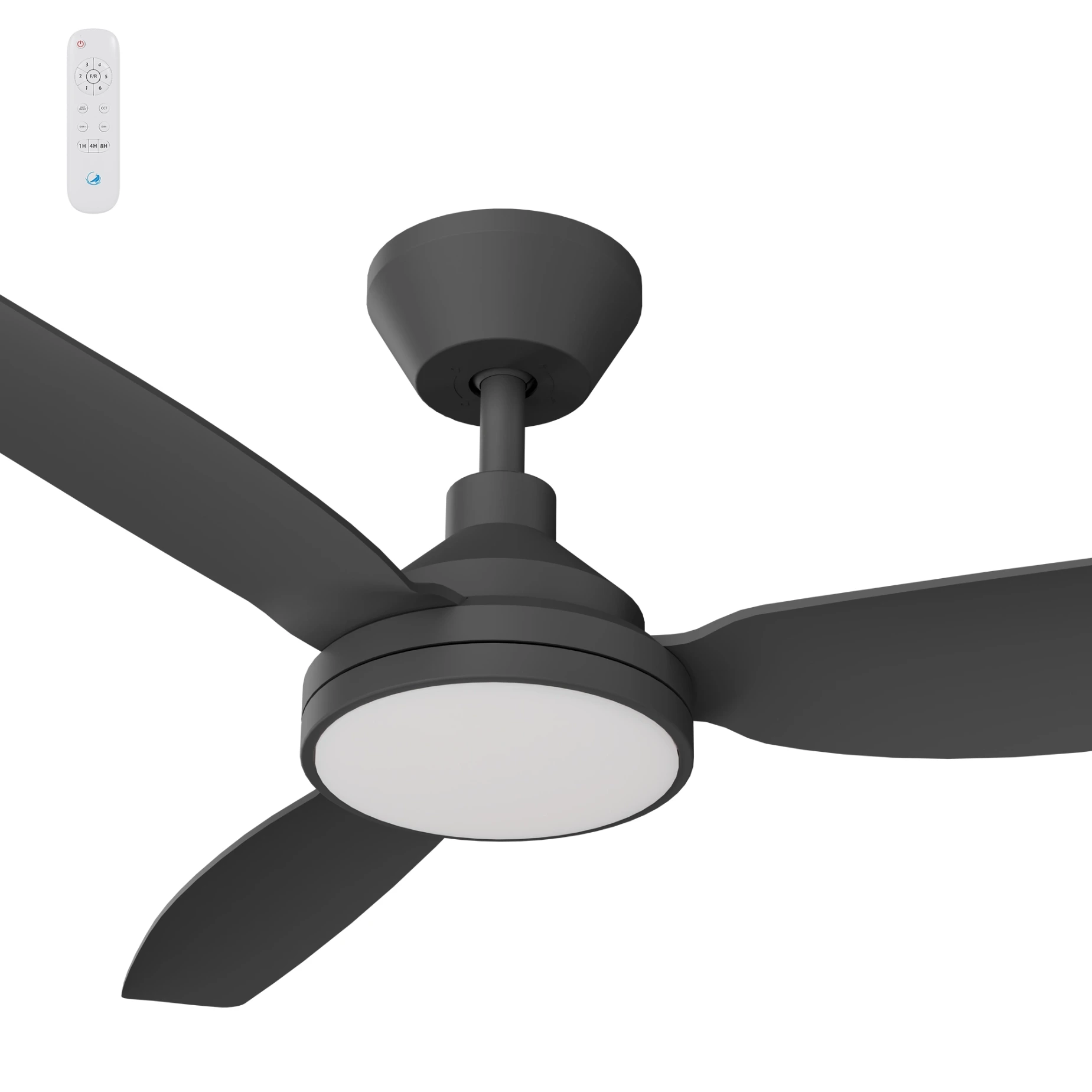
Ceiling Fan Installation Cost in Melbourne
In Victoria, ceiling fan wiring must be done by a licensed electrician, even for fans sold as easy to fit. Melbourne electricians generally quote by the job, and the biggest variable is whether a fan point already exists.
Job | Typical labour cost |
|---|---|
Swap an existing fan, or a light for a fan, on an existing point | About $80 to $220 |
New fan point with new wiring and a wall switch | About $250 to $500 or more |
High ceilings (3m+), raked or concrete ceilings | Extra time, plus parts such as an angled mount at $30 to $80 |
Guides from different Melbourne electricians quote slightly different ranges, and some start a simple swap at $150, so treat these as a guide and get a written quote.
Before you book, ask for a written quote that lists what is included, such as the bracket, removal of the old fitting and any switch changes. It makes it easy to compare two or three electricians fairly.
Two things catch people out. First, a standard light bracket is not designed to carry a fan's weight and vibration, so a fan-rated bracket or brace fixed to the ceiling joists may be needed. Second, if your wall switch only controls a light, you may want a separate switch so the fan and light run independently, which adds wiring.
The good news is that replacing an old light with a fan is often straightforward when a light point already exists. An electrician may not need to run new cable, especially if you choose a remote-controlled model.
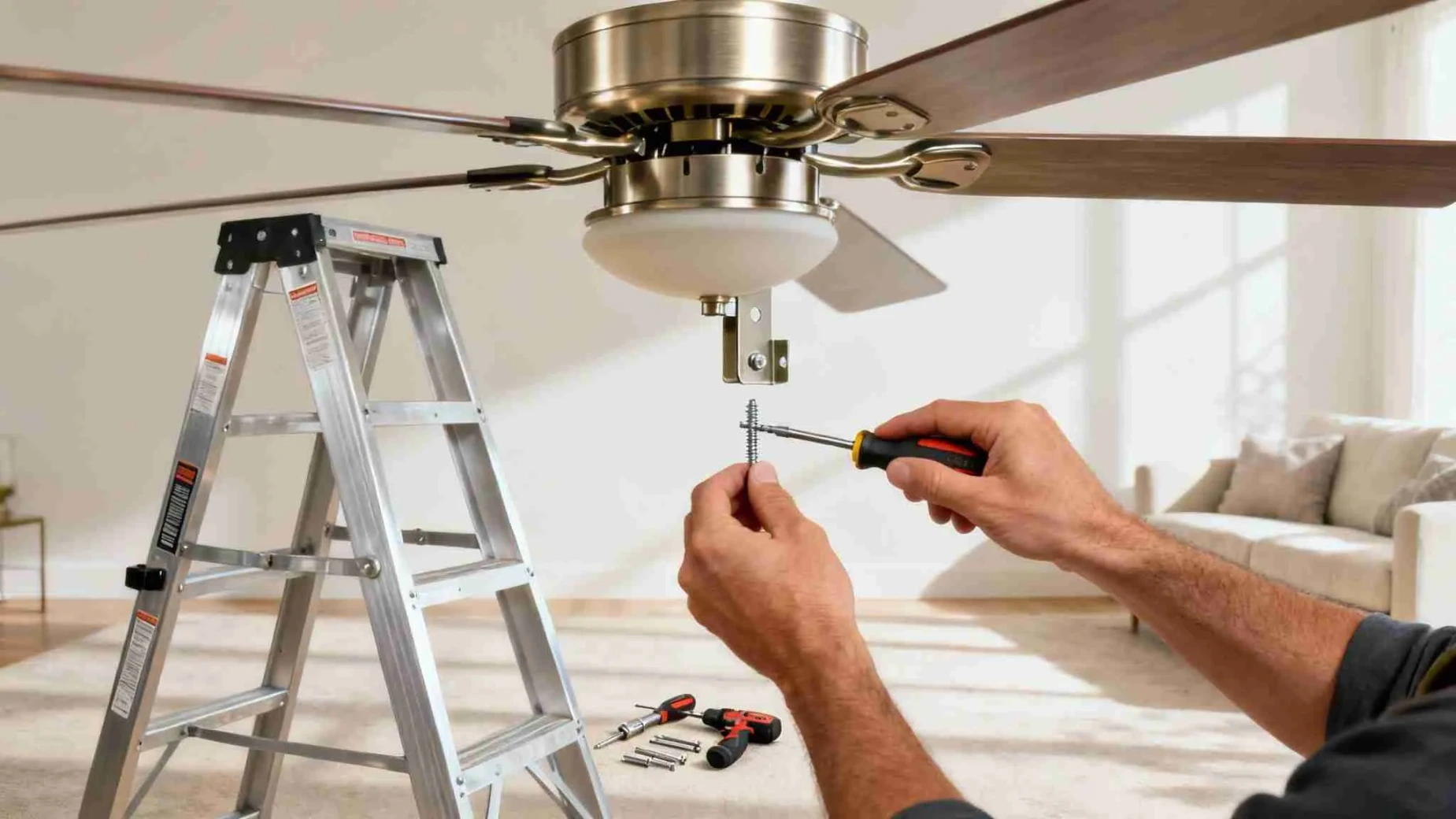
A Worked Budget Example
Say you are fitting a 52-inch DC fan with a remote in a main bedroom that already has a light point. The fan is $319 and a like-for-like installation is about $80 to $220, so the total lands around $400 to $540. Running it for eight hours a night at low to medium speed costs pennies. A 48-inch AC fan at $229 with the same installation comes to about $310 to $450.
If the room has no fan point, add $250 to $500 or more for the wiring, and the DC example climbs to roughly $570 to $820.
Which Fan Size Suits Your Room?
Size affects comfort more than most buyers expect. A fan that is too small struggles, and one that is too large creates a draught. As a guide from our range, 48-inch (122cm) fans suit small rooms around 3 by 3 metres, 52-inch (132cm) models suit standard bedrooms around 4 by 4 metres, and 56 to 60-inch fans suit open living areas, where a larger fan moves more air at a lower, quieter speed.
Check the drop too. With standard 2.4 metre ceilings, look for low-profile or hugger models so the blades sit safely out of reach. In a kitchen, choose ABS plastic or metal blades that wipe clean, and for an alfresco area choose a coastal-rated or ABS fan built for damp air.
Blade count is mostly a style choice. A three-blade fan often moves as much air as a five-blade model, because there is less drag on the motor, so pick the look you like and let the size and motor do the work.
Get More From Your Fan All Year
A fan is a 12 month appliance. In summer, run it counterclockwise so it pushes air down and creates a cooling breeze. In winter, switch to clockwise on low speed to push warm air back down from the ceiling, which helps your heating work less hard. Most fans have a reverse switch or a remote setting for this.
If you want a fan and a light in one fitting, choose a model with a built-in LED. Colour-switching (CCT) options let you go warm in the evening and cooler for daytime tasks. For more on efficient lighting, read our guide to COB LEDs, and for the full picture on airflow, see the different fans your home needs. Planning a bathroom upgrade too? Our bathroom exhaust fans cover moisture control, and our bathroom heating guide compares heat lamps with fan heaters.
Simple Ways to Cut Cooling Costs
A fan works best as part of a small routine. These habits keep summer bills down whichever fan you choose:
Raise the thermostat. Each extra degree of cooling can add about 10 percent to an air conditioner bill, so set it between 24 and 26 degrees and let the fan finish the job.
Shorten air conditioner hours. Running it only through the hottest part of the day, say 3 hours instead of 4, can trim about 25 percent from a cooling bill.
Block the heat. Close doors, windows and blinds on hot days so the room starts cooler.
Run the fan where you are. Turn it off when you leave, because it cools people rather than the room.
Ceiling Fan Cost FAQs
How much does it cost to run a ceiling fan per hour?
Most ceiling fans cost between about 0.2 and 2 cents an hour, depending on motor type and speed. Over a summer, that ranges from roughly $1 for a low-speed DC fan to about $14 for a high-speed AC fan, according to Canstar Blue figures.
Is a ceiling fan cheaper than air conditioning?
Yes, by a wide margin. An air conditioner can cost about 25 cents to $1.33 an hour, while a fan costs a few cents at most. A fan cools people rather than rooms, so many households use both.
Can I install a ceiling fan myself in Victoria?
No. Wiring a ceiling fan is electrical work that needs a licensed electrician in Victoria. Book one for the installation and ask them to check that your bracket is fan-rated.
Do DC ceiling fans really save money?
They use less power, but the yearly saving is small, often under $10 for typical use. Choose DC mainly for quiet running, extra speeds and smart control.
Can I replace a ceiling light with a fan?
Often, yes. If a light point already exists, an electrician can usually swap it for a fan, provided the ceiling can carry a fan-rated bracket. A remote-controlled model avoids extra switch wiring.
See and Hear DC Fans in Our Showrooms
Numbers only tell part of the story. At our Truganina showroom you can stand under live displays, compare a DC motor with an AC motor for noise, and check finishes such as matte black, brushed nickel and timber tones. Our Clyde North showroom serves customers in Melbourne's south-east. Browse the full ceiling fan range, see our wider fans collection, or contact the team with your room size and ceiling height and we will help you choose.