

A bathroom heat lamp gives instant radiant warmth on your skin, while a fan-forced exhaust heater warms the air and lifts the whole room more evenly. Most Australian homes are best served by a 3-in-1 unit that combines heat, an exhaust fan and a light, because the fan is what actually keeps moisture and mould under control.
This guide compares how each option heats, what it costs to run, what installation involves in Victoria, and which suits your bathroom. Spring is a good time to plan an upgrade, so the tiles are warm well before next winter.
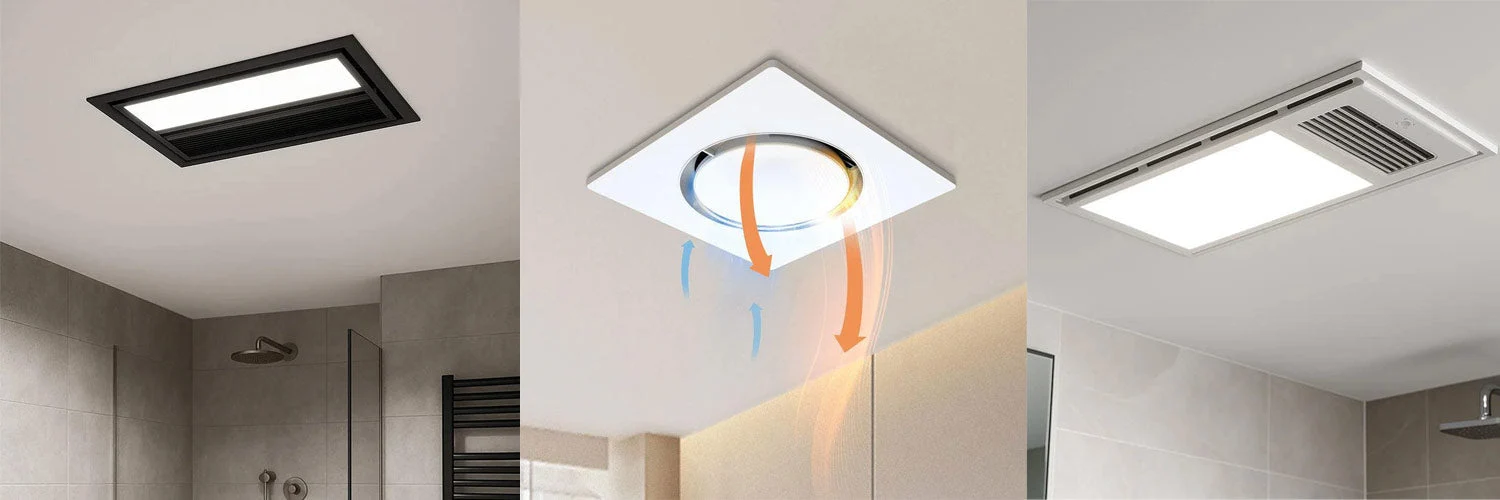
Two Ways to Warm a Bathroom
Heat lamps are infrared globes fitted in a ceiling unit. They warm you and the surfaces they shine on almost instantly, so they suit a quick, focused blast of heat after a shower. They are typically 250 to 275 watts each, and many units use two or four.
Fan-forced heaters, often sold as exhaust fan heaters, push warmed air into the room. They take a little longer to feel warm but lift the overall temperature more evenly, which helps in a larger or draughty bathroom. Some units reach 2,200 watts.
Then there is the 3-in-1 (or 4-in-1), which puts heat, an exhaust fan and an LED light in one ceiling cut-out. Each function usually has its own wall switch, so you can run heat, light or extraction on its own.
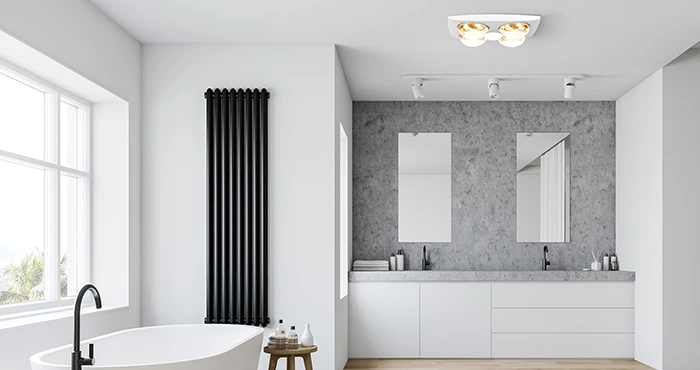
Why Melbourne Bathrooms Struggle in Winter
Melbourne's cool, damp winters, especially in the south-east, leave tiles cold and mirrors fogged. Warmth helps because warmer surfaces attract less condensation, so a heat lamp or heater can shorten how long moisture lingers.
It does not replace extraction, but the two work well together: heat keeps surfaces from steaming up while the fan removes the moist air.
Heat Lamp vs Fan Heater at a Glance
Feature | Heat lamp | Fan-forced heater |
|---|---|---|
How it heats | Radiant infrared on skin and surfaces | Warms the air in the room |
Speed | Near instant | Slightly slower |
Best for | Small ensuites and quick post-shower warmth | Larger or draughty bathrooms |
Typical power | 250 to 275W per lamp | Up to about 2,200W in some units |
Upfront cost | Lower | Higher |
Watch out for | Globes wear out and heat is localised | Higher power draw if left running |
What Each One Costs to Run
Bathroom heaters run in short bursts, so the bills are small. Using a round 30 cents per kWh (check your own tariff), here is what 10 minutes a day costs:
Setup | Power | Per 10 minutes | Per month, daily use |
|---|---|---|---|
Two 275W heat lamps | 550W | About 3 cents | About 83 cents |
Four 275W heat lamps | 1,100W | About 6 cents | About $1.65 |
2,200W fan heater | 2,200W | About 11 cents | About $3.30 |
These are estimates, but they make the point: a heat lamp or fan heater is cheap when used as intended. Costs climb if a 2,200W unit is left running for an hour. Switch it off when you finish, and run the exhaust fan on its own to clear the steam.
Do You Still Need an Exhaust Fan?
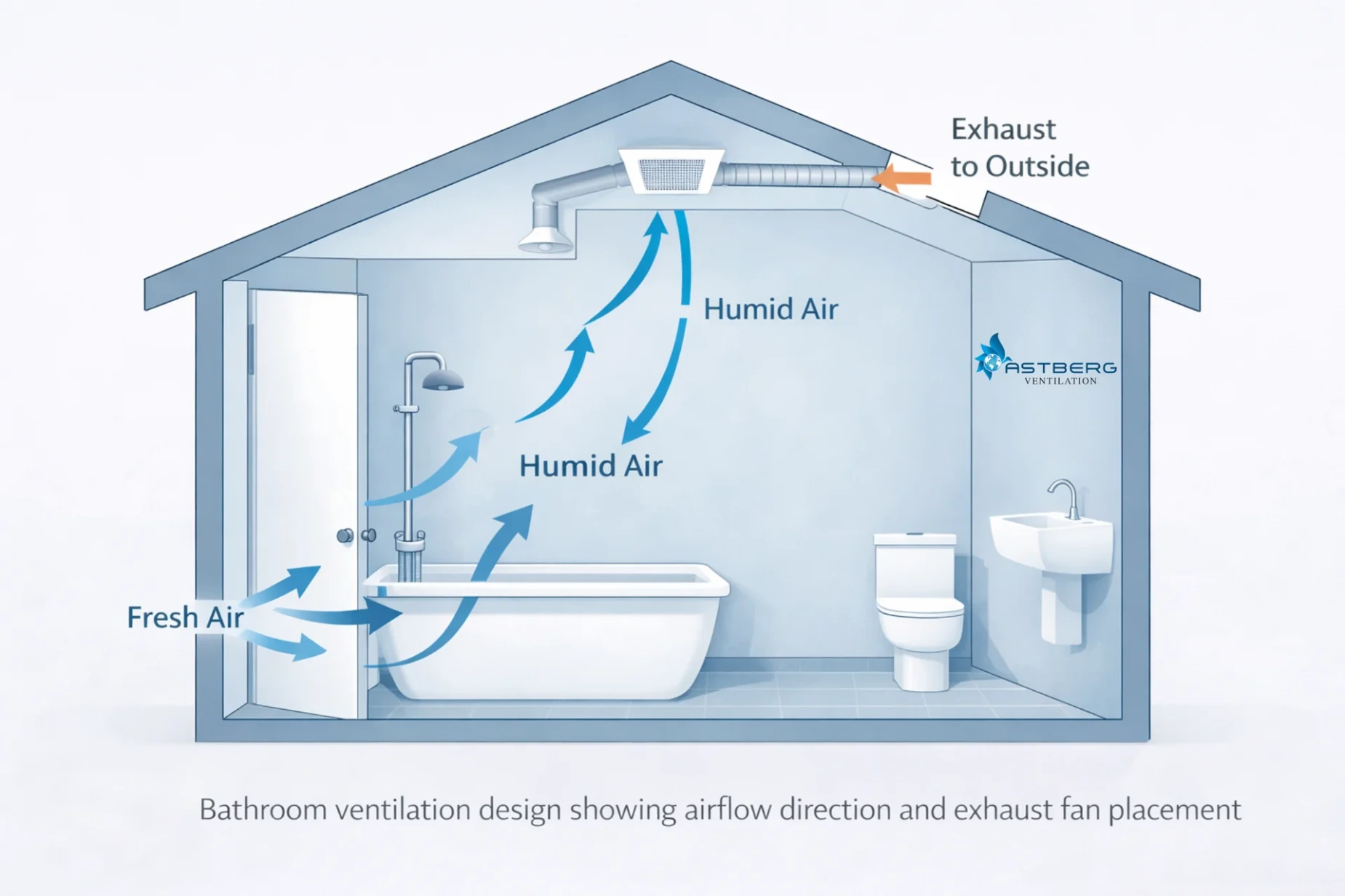
Yes. Heat makes you comfortable, but only ventilation removes the moisture that causes mould on ceilings and grout. A bathroom without extraction stays damp long after you leave, whichever heater you choose.
Check the airflow rating in litres per second rather than the wattage. Guidance based on Australian Standard AS 1668.2 suggests about 25 L/s as a minimum for bathrooms up to 10 square metres, with 25 to 35 L/s suiting a typical Melbourne bathroom of 8 to 12 square metres. Larger bathrooms may need 40 to 50 L/s.
The duct should run to the outside. Venting into the ceiling cavity is a building code problem and a fast route to mould, so ask your electrician to confirm where the duct terminates.
Bathroom size | Suggested extraction rate |
|---|---|
Up to 10 square metres | About 25 L/s as a minimum |
8 to 12 square metres (typical) | About 25 to 35 L/s |
Larger bathrooms | About 40 to 50 L/s |
One 3-in-1 Unit or Separate Fittings?
A 3-in-1 needs one ceiling cut-out and one run of wiring, which is why it is usually the tidier and cheaper way to get heat, light and extraction together. One Australian guide puts a 3-in-1 installation at $350 to $600, against $250 to $450 for a fan alone.
Separate fittings still make sense in some bathrooms. If you already have an exhaust fan you like, adding a stand-alone heat lamp lets you keep it. The trade-off is a second cut-out and more ceiling work, and you will have two fittings to maintain instead of one.
Installation and Costs in Victoria
Bathroom heaters and exhaust fans are hard-wired, so a licensed electrician must install them in Victoria. The work follows AS/NZS 3000 wiring rules, and a heater element usually needs heavier wiring and a suitable circuit.
Job | Typical installed cost |
|---|---|
Standard exhaust fan | About $150 to $500 |
3-in-1 heat, light and fan unit | About $350 to $900, depending on the unit and wiring |
Like-for-like swap of an old unit | From about $180 to $250 in one guide |
A 3-in-1 typically adds $100 to $200 to the unit price compared with a basic fan. If you are replacing an old unit, choose a model designed to retrofit into the existing cut-out, because a like-for-like swap is quicker and cheaper than opening up the ceiling.
Before you book, ask the electrician to check three things: the cut-out size for a retrofit, the duct route to the outside, and whether your existing wall switches can run heat, light and fan separately.
Which Should You Choose?
Small ensuite with a shower: a 3-in-1 with two heat lamps gives quick warmth and clears steam.
Family bathroom or a cold, south-facing room: a four-lamp unit or a fan-forced heater warms more of the room.
Windowless bathroom: choose a strong extraction rating first, then add heat.
Existing fan you are happy with: a stand-alone heat lamp fitting adds warmth without changing the fan.
Renovating on a budget: fit a quality exhaust fan now and add heat later.
If in doubt, choose a 3-in-1 unit with a strong extraction rating and two or four heat lamps to suit your room. Put the budget into the fan first, because ventilation protects the bathroom itself while heat protects your comfort.
Our heat lamp range runs from $65 to $279, including the Radiant and Solano styles. Browse all our bathroom heat lamps, our exhaust fans and our heaters and exhaust fans to compare options.
Safety and Care Tips
Keep towels, robes and cabinetry clear of heat lamps, and do not leave a heater running unnecessarily.
Clean the vents and light covers to keep airflow and brightness up. Cleaning the grille about every six months is a good habit.
Expect a good exhaust fan to last 10 to 15 years, while a cheap unit may last only 3 to 5. Grinding or rattling usually means the motor is failing.
Replace failed heat lamp globes with the correct wattage and type.
Before buying a replacement unit, measure the existing cut-out and check the duct route so the new unit fits without extra ceiling work.
Book a licensed electrician for any swap, even when the new unit looks identical to the old one.
Fans matter elsewhere in the home too. For a comparison of what fans cost to run, see our guide to ceiling fan running costs, and for the full picture on airflow, read about the different fans your home needs.
Common Bathroom Heating Mistakes
Choosing a fan by wattage instead of airflow. Look for the L/s rating.
Venting the fan into the ceiling cavity instead of to the outside.
Relying on heat alone. Without extraction, moisture stays and mould follows.
Wiring everything to one switch. Separate switches let you run the fan without the heater.
Running a high-wattage heater for long stretches when a short burst would do.
Get Warmer Faster, Without Waste
A few habits make any bathroom heater work better. Close the door so the warmth stays in, switch on the heat lamps as you step out of the shower, and leave the exhaust fan running until the mirror clears and surfaces feel dry.
If your unit has an LED light, keep it on its own switch too. That way you can use the light and fan for a quick morning routine without heating a bathroom you are barely using.
Bathroom Heating FAQs
Is a heat lamp cheaper to run than a fan heater?
Per minute, yes, because a heat lamp draws 250 to 275 watts against up to 2,200 watts for some fan heaters. Both are cheap in short bursts, so the cost depends mostly on how long you leave them on.
Do heat lamps stop mould?
Not on their own. Mould is controlled by removing moisture, so you need an exhaust fan ducted to the outside. A 3-in-1 unit gives you both in one fitting.
Can I replace my old 3-in-1 unit with a new one?
Often, yes. Look for a model made to retrofit existing cut-outs, measure the opening and check the ducting first, and have a licensed electrician fit it.
How many heat lamps do I need?
Two suit a small ensuite, and four suit a larger or colder bathroom. Most Australian 3-in-1 units come with two or four lamps.
How long should I run the exhaust fan after a shower?
Run it until the mirror has cleared and surfaces have stopped feeling damp. A run-on timer or humidity sensor can take care of this automatically.
Are heat lamps safe in bathrooms?
Yes, when the unit is made for bathroom use and installed by a licensed electrician. Combination units are designed to run safely when used as directed, so keep towels clear and do not leave them on unnecessarily.
Do I need an electrician to install a bathroom heater?
Yes. In Victoria hard-wired bathroom fixtures must be installed by a licensed electrician following AS/NZS 3000.
Compare Bathroom Heating in Person
Not sure which suits your bathroom? Bring the room dimensions and a photo of your existing ceiling cut-out to our Truganina or Clyde North showroom, and our team will help you match a unit to your space. You can also browse our bathroom collection online, or contact us with your questions.