

The biggest lighting trends of 2026 are sculptural statement pieces, natural and mixed materials, a return of chrome, soft paper and fabric shades, and warm, layered light you can control. For Melbourne homes, especially new builds in the west and south-east, the trick is choosing one or two of these and getting the size, finish and light quality right.
We have pulled together what Australian trend reports and lighting brands are highlighting this year, then translated it into decisions you can make in a real house with real ceiling heights. Where a trend needs a warning, we say so.
2026 Lighting Trends at a Glance
Trend | Works best in | Watch out for |
|---|---|---|
Sculptural chandeliers | Entries, dining rooms, stairwells | Drop height and ceiling weight |
Stone, alabaster and brass | Kitchens and living rooms | Choose one hero material |
Chrome | Bathrooms, kitchens, hallways | Match nearby tapware |
Paper and fabric shades | Bedrooms, nooks, entries | Dust and upkeep |
Warm, layered, smart light | Every room | Dimmer and driver compatibility |
Sculptural Chandeliers Replace Wall Art
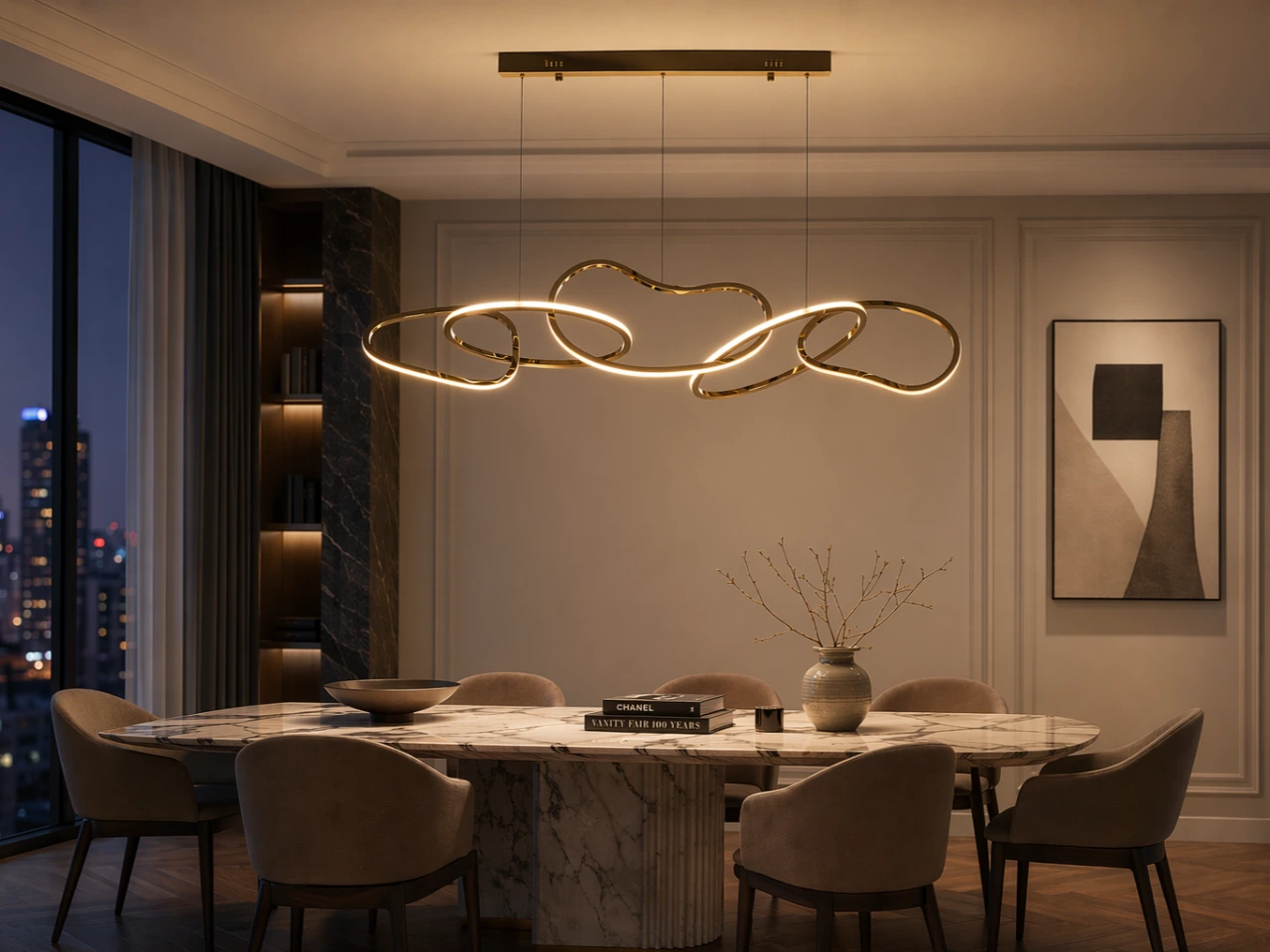
Designers are treating chandeliers and bold pendants as the main artwork in a room rather than a background fitting. Expect organic curves, oversized forms and pieces that look good even with the light switched off.
In Melbourne homes this works best in double-height entries, open dining areas and above stairwells, where a large piece has room to breathe. In a standard room with 2.4 metre ceilings, the drop matters, because a piece that hangs too low becomes a head-height hazard. Our guides on choosing chandelier size for a dining room and chandeliers versus pendant lights walk through the measurements. If you are considering a heavy piece, read what needs to be right before you hang it first.
Looking for designer chandeliers in Melbourne? Our chandelier range runs from traditional crystal to modern and sculptural styles, so you can compare shapes, finishes and scale side by side.
Stone, Alabaster and Brushed Brass
Materials are doing the heavy lifting this year. Australian trend lists point to travertine pendants, alabaster shades and brushed brass arms, all with a soft, grounded feel rather than a glossy one. Designers also describe a wider move from glossy finishes to matte and natural surfaces, and from cool greys to clay, sand and olive tones.
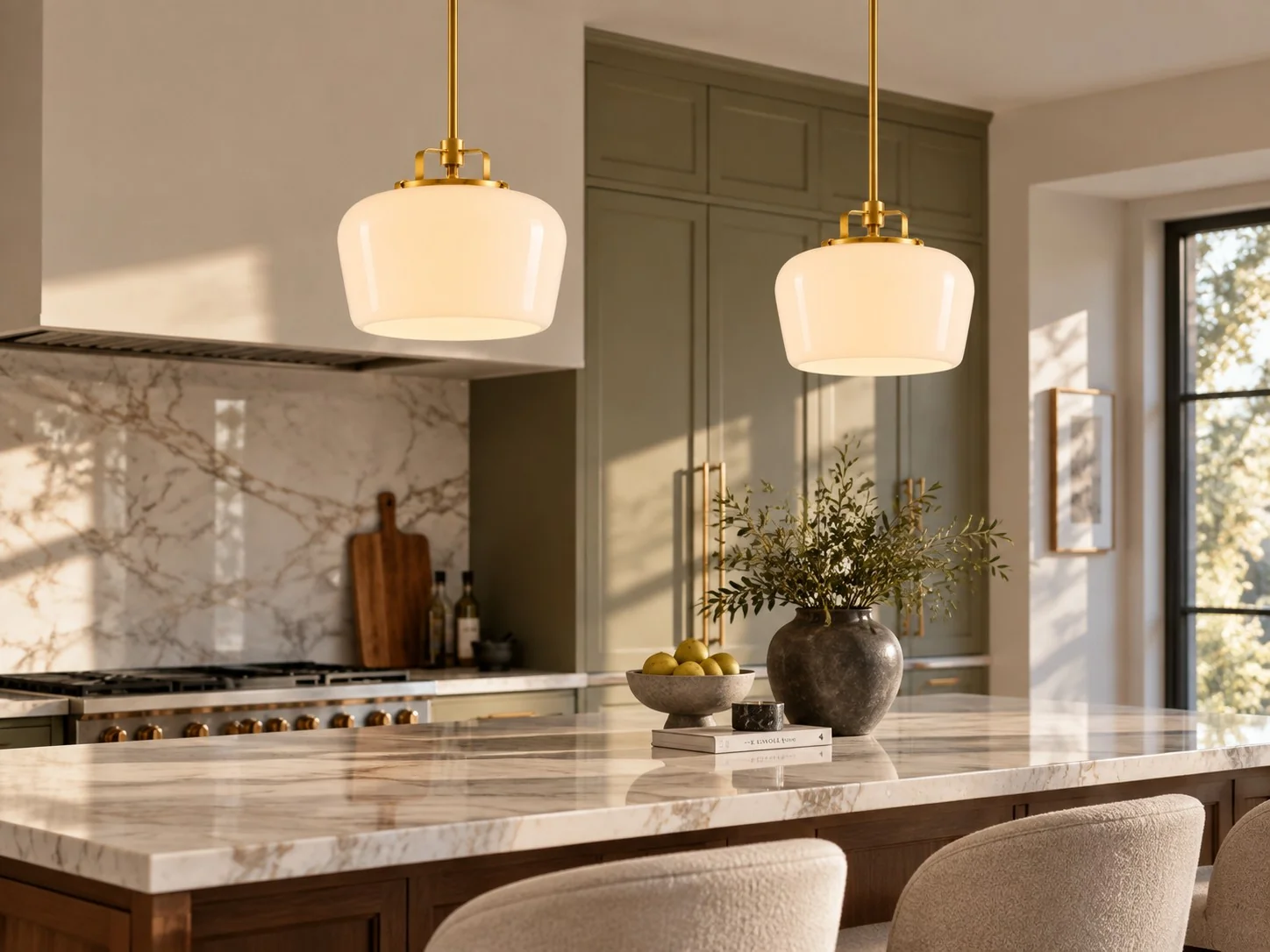
Mixed materials belong to the same story: brushed copper against marble, or timber against concrete, where smooth meets rough. The practical tip is to pick one hero material per room and echo it in a smaller way elsewhere, such as brass in the pendant and the cabinet handles. Our pendant collection is a good place to compare finishes side by side.
Chrome Is Back
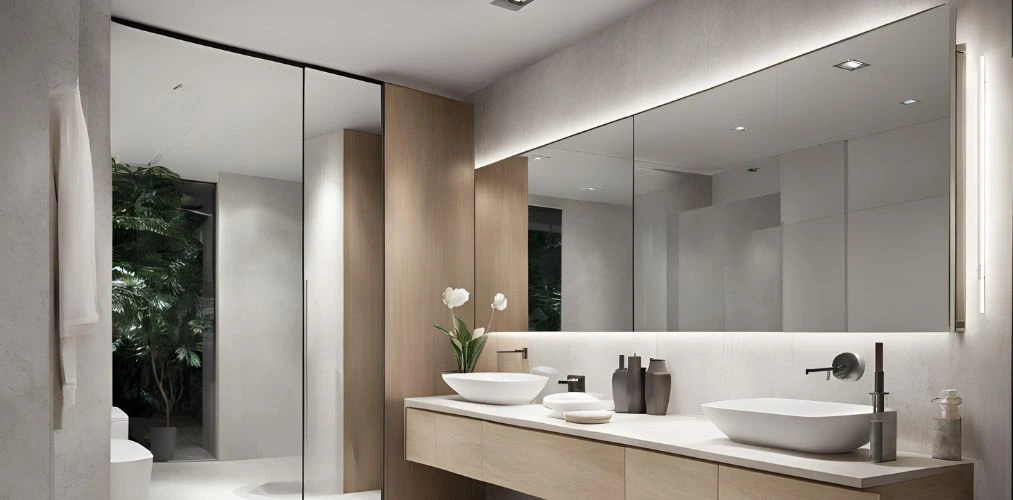
Chrome has returned in sconces, curved floor lamps and sleek pendants, offering a cool, mirror-bright edge that suits mid-century and Art Deco-inspired interiors. It also pairs neatly with chrome tapware, which makes it a natural fit for bathrooms and kitchens.
If your fixtures are brushed nickel or black, do not force it. The trend works best when the finish matches the tapware and hardware nearby, so the look feels planned rather than mixed by accident.
Paper and Fabric Shades Soften the Look
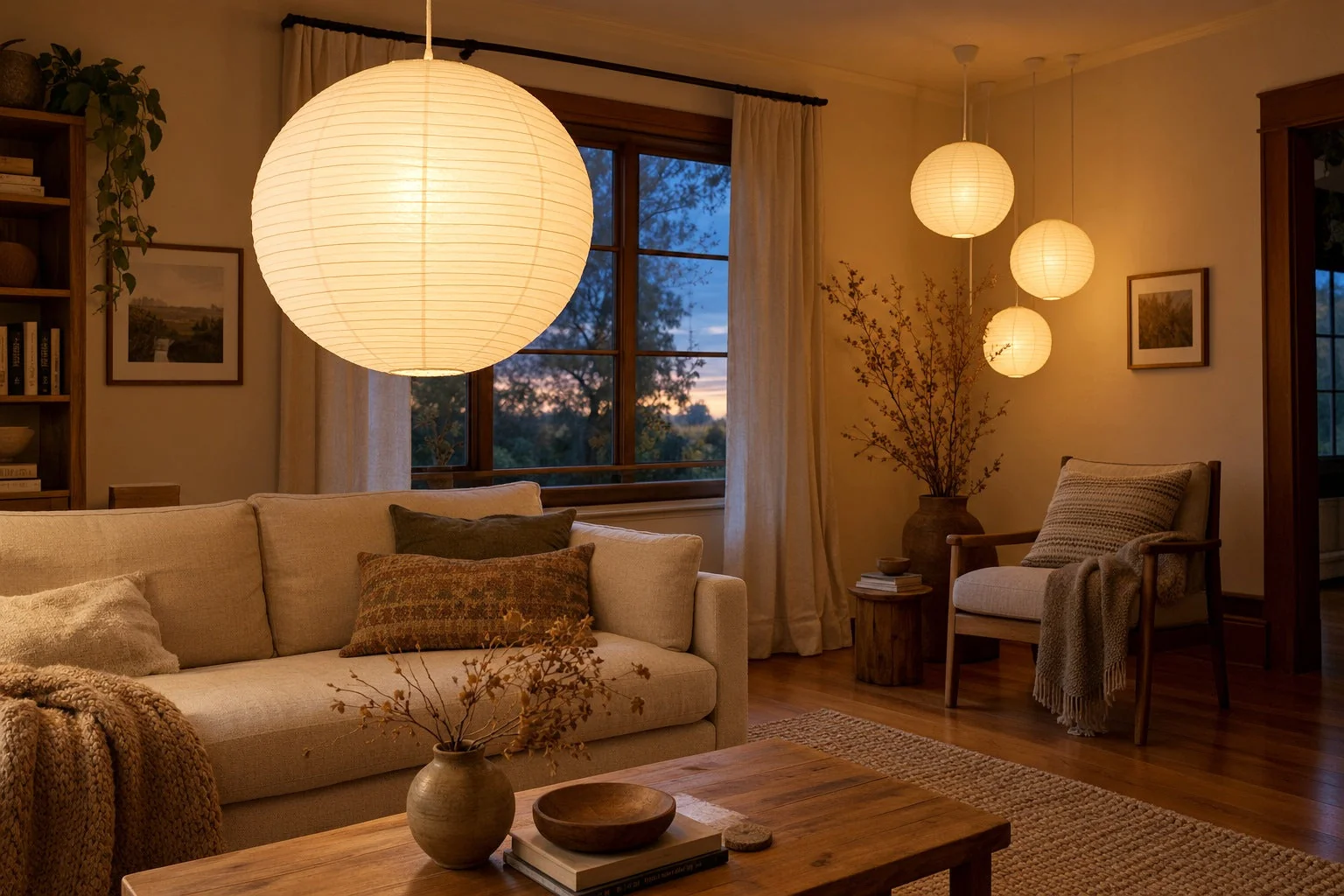
Soft, diffused light is trending. Fabric lighting is described as airy and textured, while Japanese-style paper lanterns and small standing lamps are appearing in more experimental shapes. Both suit bedrooms, entries and cosy dining nooks, where a gentle glow matters more than raw brightness.
Paper and fabric need a little care. Dust shows on pale shades, so choose a design you can maintain, and see our tips on cleaning an origami-style pendant. For tight spaces, our guide to pendant lights for small rooms shows how to get the look without crowding the ceiling.
Warm, Layered and Smart Light
Lighting is now judged on how a room feels from morning to night, not just how bright it is. Warm 3000K is the comfortable default many brands now ship with, and circadian systems shift from cooler light of about 5000K in the morning to warm amber near 2700K in the evening. Smart controls, motion sensors and rechargeable portable fixtures are also gaining ground, especially for renters.
You do not need a full smart home to benefit. Start with dimmers and warm globes in living areas, add layers from ceiling, wall and lamp, and choose colour-switching options where one room does several jobs. If you are planning downlights, our room-by-room downlight guide covers spacing and colour temperature, and our post on COB LEDs explains efficient high-output options.
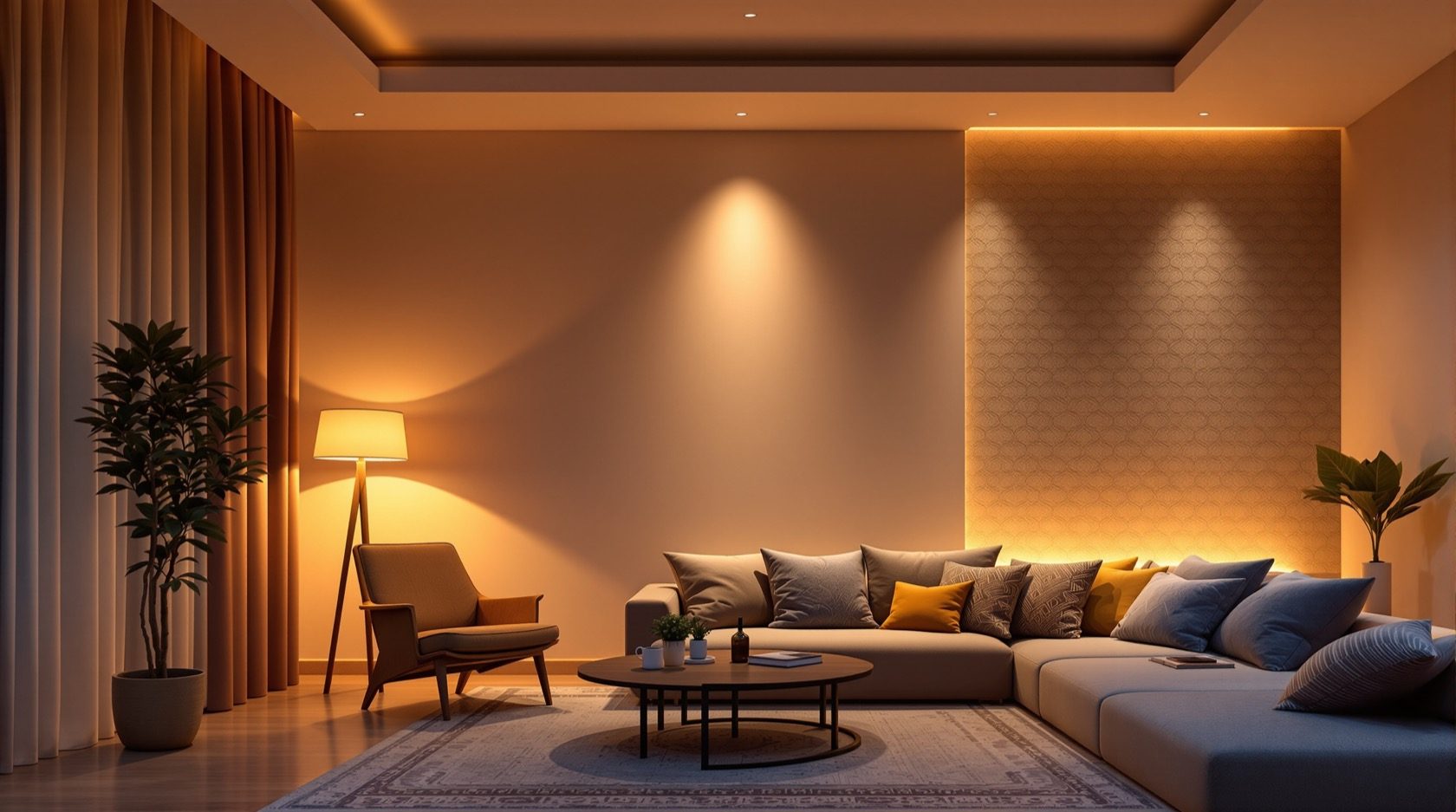
Think in three layers: ambient light from the ceiling, task light where you read or cook, and accent light such as a wall light or lamp that adds warmth. A room with all three feels finished even when the individual fittings are modest, and each layer can be dimmed or switched on its own.
Choosing Finishes That Work Together
Mixing finishes is easier with a simple rule: choose one dominant finish, one supporting finish and, if you like, one accent. For example, brushed brass on the main pendant, matt black hardware in support and a touch of chrome in the bathroom.
Keep the colour temperature consistent across fittings so brass and stone read as warm rather than patchy, and look at samples in both morning and evening light, because finishes shift noticeably through the day.
Planning Lighting in a New Build
If you are building in Melbourne's west or south-east, lighting decisions arrive early. Your electrician needs positions confirmed before rough-in, so choose your statement pieces first and place downlights and wall lights around them, rather than the other way round.
Ask for extra fixing points above any spot where a heavy chandelier may go, and settle wall switch positions and dimmer types at the same time. Changing these after the walls are lined is slower and more expensive than deciding on the plan.
Budget Where It Shows
Spend on what you see and touch every day: one statement piece in the main living or dining space, and quality dimmable lighting in the rooms you use most. Save on secondary spaces with simpler fittings in the same finish, so the whole house feels cohesive without every room needing a hero.
How to Try a Trend Without Regret
Start with one statement piece, such as a chandelier or a pendant cluster, and keep the rest of the lighting simple.
Match the finish to your tapware, door hardware and cabinetry so the trend looks planned.
Measure first. Check ceiling height, the drop you need and the width of the table or space below.
Plan for control. Put statement pieces on a dimmer so they can be dramatic at night and quiet by day.
Check the weight. Heavy chandeliers need a proper fixing point, and a licensed electrician should install anything wired to the mains.
Trends to Treat With Care
Not every trend suits every home. Very ornate shapes can overwhelm a compact room, and a high-gloss statement piece can clash with the matte, natural finishes that are leading this year. A good test is whether you would still like the piece with your current furniture removed. If the answer is yes, it is a keeper.
Choose quality construction and a finish you can live with for a decade, then let cushions, art and lamps carry the short-lived trends. That way the big fixtures in your ceiling stay relevant long after this year's colour palette has moved on.
See 2026 Styles in Our Melbourne Showrooms
Photos flatter, and finishes such as brass, chrome and alabaster look different in daylight and evening light. Visit our Truganina showroom or our Clyde North showroom to compare pieces from brands such as CLA, Domus and She Lights, and ask our team about sizing for your ceiling height. Prefer to browse first? Start with the chandelier collection or our indoor wall lights. Bring photos of the room, the ceiling height and your tapware or hardware finish, and we can help you narrow the options quickly.
2026 Lighting Trend FAQs
What are the biggest lighting trends in 2026?
Sculptural chandeliers and pendants, mixed and natural materials such as travertine, alabaster and brass, chrome finishes, soft paper and fabric shades, and warm, layered lighting with smart controls.
Is chrome lighting back in style?
Yes. Chrome is returning in sconces, lamps and pendants, and it works best when it matches nearby tapware and hardware.
What colour temperature is best for a living room?
Warm white around 2700K to 3000K feels comfortable for living areas. Choose dimmable or colour-switching lights if the room also needs brighter light for tasks.
Will a sculptural chandelier fit a standard ceiling?
It can, if you check the drop and the fixing. With 2.4 metre ceilings, choose a lower-profile piece or a shorter suspension so the lowest point stays well above head height, and confirm the ceiling can carry the weight.
How many layers of lighting does a room need?
Aim for three: ambient, task and accent. Even a simple room feels balanced when each layer can be dimmed or switched separately.
Are paper pendants practical in a kitchen or bathroom?
Paper and fabric suit dry, low-humidity spaces such as bedrooms, entries and dining nooks. For steamy or greasy rooms, choose materials that wipe clean and check the product's rating.
Where can I buy designer chandeliers in Melbourne?
Oz Lights Direct stocks chandeliers online and at our Truganina and Clyde North showrooms, so you can view designs in person and get sizing advice. Contact our team to ask about a specific style.